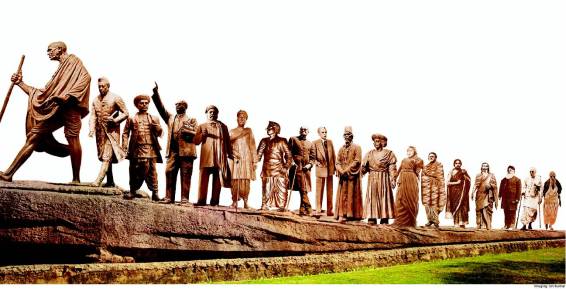
 From lectures we were told of the importance language plays in the resistance and building of Empires. But from that we were able to realize that history plays a big role in the resistance of strengthening of an empire, both lectures Chaturvedi and O’Toole were able to shed light on the importance history has on empire. Yet both lectures had a different outlook on the responsibilities that history writers have to the world. HIstory writing is not only a way to release your burdens the way Nehru saw it but a way to fulfil the patriotic historians call that is vital is when resisting Empire.
Professor O’Toole had a different look on history then that of Chaturvedi’s, instead of seeing the importance of personal accounts, she saw the importance through history through primary sources, such as Del La Vega or the Martin Chambi photos. For O’Toole is wasn’t about the inner disputes and inner challenges that the individual felt towards Empire that both Gandhi and Savarkar felt. But the collective groups that we’re able to get there resistance told and documented as a primary source.
From Chaturvedi’s lectures he described history as something essential to understanding what it is going on in the future and being able to experience and then tell that history is vital in order of understanding the resistance. Chaturvedi discusses political historian and revolutionist Savarkar, who believed in the “Patriotic Historian”, and how it is the duty of the people to not be a slave to history. From this view of an active history Chaturvedi and Savarkar I believe are trying to make the people feel motivated and the sense of urgency to act for their own futures. When Savarkar says “master and not slave to history”, he was calling for his Indian nation to not sit idle to the British Empire and take back their India.
In the Nehru text history is seen as a way to relieve ones burdens, and shows these problems that you’ve been facing to the world so they can understand too. Nehru states, “By writing about the past I have tried to rid myself of the burden of the past”, by this Nehru sees the relief that comes from writing your past. Writing about the past also allows you to recognize what’s going on in your life and helps make a clear picture to what that is, so when realising your self of the burdens of the past you’re allowing yourself to get a clear sense of what is happening in the future.
History from all perspectives is yet another form of resistance to Empire. From both of the understanding of Nehru and Savarkar history is a way to get people to know your side the past and how it’s affected you and why acting on this information alone is important. Chaturvedi’s and O’Tooles notion of history may be different but they both present and active history that must be saved and discussed for the future generations.