To Choose or Not?

Connections from past and present are always a recurring theme in our history. A problem in our history that always happens to be a problem is the treatment of women and the lack of choices and power over one’s own body they have. Women have always been put in a position of submission by men, in lectures throughout the quarter we have discussed the implications of women in various time periods and cultures. Recently our focus has been on Iranian women and their lack of control over how they should dress their own bodies. We see this lack of choice for women all across the world even in our culture in the U.S. were women reproductive rights are on the line. Though U.S. and Iranian culture are completely different they both show the over step of government into women’s personal lives and how these choices made by men restrict our freedoms.

  From my understandings of lecture and present knowledge of Iranian women’s dress has and still is under the control of the government and is enforced by officers. In their culture Iranian women must conceal their bodies in loose fitting clothing that cover their arms and all of their legs down to their ankles. Though for many years women had become accustomed and comfortable with their required dressings, in 1936 the Pahlavi dress code was enforced which banned women from wearing their normal required dressings and chador. This enforcement was thought to help make the nation become more progressive but it’s safe to say it was to fall into the western ideals that ultimately we’re trying to push out Islamic influences on the country.

Though these dress codes seem that they would’ve gave women more freedoms it did the opposite for most since most women had already grew comfortable with there dressings being forced to expose themselves was something that they didn’t want to do. Because of these dress codes most older women didn’t leave the house which shows how these forms of laws in fact do restrict women’s freedoms. Though it might seem to outsiders and people who don’t understand the culture that being able to wear western styled clothes is a freedom for these women it wasn’t because of their association and comfort of their regulated dressings. The fact of the matter is that women who aren’t given the right to choose for themselves will feel subjugated to how laws and men want the women of their society to behave and look.
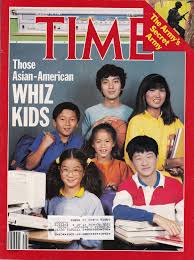
Damaging Effects of a Model Minority Status

Asian Americans in the U.S. are now facing a new hurdle as a minority group, being referred to as the “model minority”. This term not only harms Asian Americans by pitting them

images

Time Magizine, August 31, 1987. Cover by Ted Thai

against other minority groups but also changes the way we see Asian Americans in the country. Though being called a model minority is a racial stereotype that can be seen as positive rather than most racial stereotypes, it still has its burdens and
negative connotations.

This “model minority” stereotype that Asian Americans have been forced open has not only created this image of Asian Americans being the ideal minority but also puts stress and pressure on top of the individual Asian American. Because of this stereotype that Asian Americans are book smart, driven, and also are successful in their life, has created this pressure for them to always be their best. Especially for Asian American students who struggle in school will have usually isolate themselves and not ask for the help they need. Being this model minority and not ones to complain, cause attention or problems to themselves, is usually hard to combat these racist remarks towards them.

White America has a long history of painting a picture on minority groups that they feel don’t represent the ideal American lifestyle. This can be seen with African Americans who were painted as rapists and thugs, and even todays Muslim population that are seen as terrorists and threats to our nation’s security. Asian Americans also shared the burden of these narratives that white Americans produce, and were seen as rapists. Asian Americans finally were able to assimilate and were able to benefit from capitalist America. Since they are a hard working people being able to produce and contribute has always been something Asians have given America from the railroads to city’s infrastructures.

The catch to this stereotype is that this “model minority” should not be taken as a compliment but as another way for white America to reinforce a racial social hierarchy. During the civil rights era when black communities resisted segregation and became more assertive in their fight, white Americans turned their eyes to Asian Americans, and questioned why other minorities groups couldn’t be like the Asian AMericans, hardworking with no complaints. This only distanced Asian Americans from other minority groups, since they were showcased on how minorities should behave, in American society. This was simply due to the fact that white Americans at the time couldn’t realize that though both groups are minority people, Asian Americans had not faced systematic dehumanization for hundreds of years the way African Americans had experienced in America.

The term “model minority” is not something to be held as a positive attribute for the Asian American community. This racially dividing term not only harms the way other people view Asian Americans as a minority group but also the high standards that we’ve placed on Asian Americans and how they try to hold themselves up to. This term is only another way to divide minority groups and pit them against each other, but through recognition of each other’s communities struggle, there can be better understanding and better relationships within all communities.

References; The Professional Burdens of Being a “Model Minority” – ‘Model Minority’ Myth Again Used As A Racial Wedge Between Asians And Blacks