Empires, the symbol of power and the definite sign of greatness was something that people in societies like the Romans believed was divine and the want of the Gods. But like people, empires have a lifeline and eventually cease to exist only in the form of ruins. Ruins are the bones left of an empire after that society falls in whichever way it did so, when looking at them from a historical point of view ruins can be a symbol for the inevitability of empires and a reminder of death. In this blog I want to talk about how ruins in paintings can be associated to memento mori and how they represent the inevitability of empires which relates to the concept of time coming in full circle to relate back to empires. It’s important to recognize the relationship each concept has with the other because it helps us get a better understanding of society and the way human essence is important to humans.
The first concepts we can connect in the circle is ruins in the form of memento mori in paintings. Memento mori in paintings is usually an object or objects used to remind viewers of the inevitability of death. It usually also places an emphasis on the emptiness of the world so we can focus on what is next after life. To me this basically sums up what a physical ruin can stand for. Ruins are the remains of societies and structures left by the passing of humans and their man made social constructs and structures. Ruins make people who view them think of what happened to the thousands of people who walked through those empires, and where did they go? Ruins in paintings represent those deaths of the citizens of those empire and the death of the structures and social construct the rulers created. Ruins are like bones left behind and memento mori is shown through bones, tombstones, and mirrors so the two concepts coincide.
Then these two concepts of ruins showing memento mori help weave in the concept of the inevitability of empires being ruined. Since memento mori is the reminder of the inevitability of death which is what ruins depict, and ruins come from empires! So if we work backwards to connect these things together we can see how because ruins are reminders of death and the death of a society (memento mori), we have to now what are ruins which were empires. This also helps us bring in the concept of time, because the inevitability of ruins shows the passing of time. Essentially I’m trying to say that when empires are created they are inevitably going to fall which ties into memento mori and ruins because they are what empires become death, they remind us of death and the passing of time is shown throughout all of it. In painting we can also visualize time in ruins when painters paint things like vines and new life formed where old life used to inhabitat, which shows the grand cycle of life where in the death of one thing can come life of another like nature and plants.
In the end all of this information that I shoved in your brain is important because it shows how society acknowledges the fact that things in this world aren’t meant to last forever. With the reminder of death with memento mori humans focus on what’s next (human essence) they try to build things like empires as a way to have something to outlast them when they die and the cycle of empires to ruins to new beginnings goes in circle.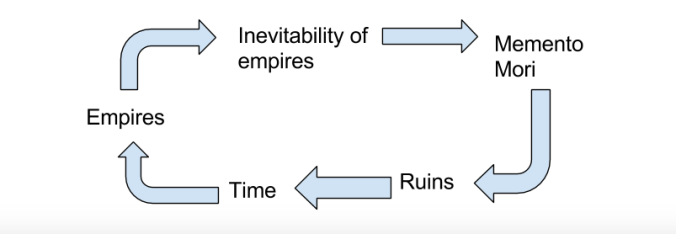
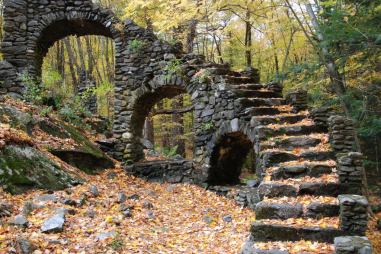 ociety that once was. They also show us how ruins can represent the death of society and a metaphor for the actually human being. To really understand how ruins can shadow a human body you’d have to closely examine the death of a human and the collapse of an empire. Like a human body, empires I believe were not meant to always last forever, like a human body they have a expiration date which might not be as obvious but still something foretelling since they were created by imperfect humans. Empires social and political structures will collapse just like a human’s organs will start to fail. When a person dies all that is left of them is their bones just like when a empire is destroyed all that is left of it is its ruins, the structures with the strongest support will last just like some bones that you see in museums. Now that the juxtaposition of human bones and ruins has been explained, human essence and how its relation to ruins go hand and hand can become simplified.
 Where there is ruin, there is hope.